


24. April 2026
SR Group: Microgrid for heavy-duty transport with solar, battery, and high-power charging
#Articles #Fast charging #Idunn #Solutions
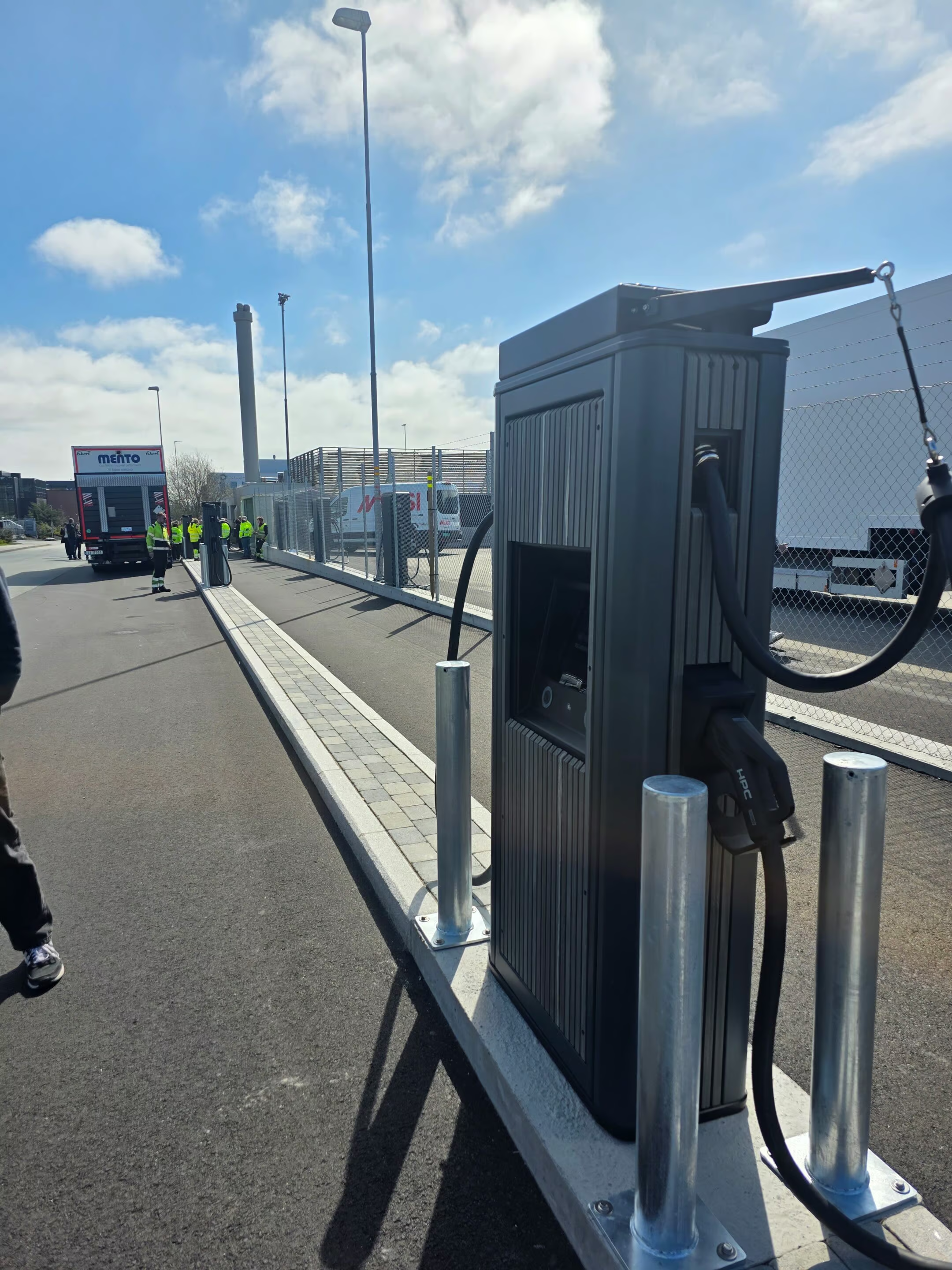
Kverneland Energi has delivered a complete microgrid system for electric heavy-duty transport to SR Group, combining 536 kWp solar power, 675 kWh battery storage, and 1,440 kW charging capacity, controlled in real-time by the company's proprietary Mimir system. The system provides full charging capacity without costly grid upgrades: Mimir performs peak shaving using the battery and prioritizes self-produced solar power, enabling simultaneous fast charging within the grid's available capacity.
Fact Box
| Key Figures | Value |
|---|---|
| System Type | Microgrid for heavy-duty transport (solar + battery + high-power charging) |
| Control System | Mimir (Kverneland Energi) |
| Solar Power System | 536 kWp, estimated 470,000 kWh/year |
| Battery System (BESS) | 675 kWh |
| Fast Chargers | 3 × 400 kW DC (Idunn) |
| Depot Chargers | 3 × 80 kW DC (Idunn 80) |
| Total Charging Capacity | 1,440 kW distributed across 6 charging points |
| Functionality | Peak shaving, energy arbitrage, load balancing, balancing markets |
| Completed | 2026 |
The Challenge: Capacity and Peak Demand
The transition to an electric truck fleet places extreme demands on the power grid. For SR Group, the challenge was twofold. The need for simultaneous fast charging exceeded the available capacity from the local grid. At the same time, high peak demand during charging leads to expensive demand charges in grid tariffs. The goal was maximum charging capacity without expensive and time-consuming grid upgrades.
The Solution: Strategic Energy Integration
Kverneland Energi delivered a complete energy system where the hardware is linked by the Mimir control system. Mimir acts as the brain of the facility, ensuring that the energy flow between solar, battery, grid, and chargers is always optimized.
The core components are a 536 kWp solar power system with an estimated annual production of 470,000 kWh, a 675 kWh battery system (battery storage / BESS) that shaves peak demand and stores solar surplus, and a charging park consisting of three 400 kW DC fast chargers (Idunn) for vehicles in active rotation plus three 80 kW DC depot chargers (Idunn 80) for vehicles with longer dwell times.
How Does Mimir Work?
Without smart control, the components would work independently of each other. Mimir turns the facility into an intelligent microgrid through three mechanisms.
Peak shaving: Mimir monitors the total draw from the power grid and automatically injects power from the battery when charging demand exceeds set limits, avoiding costly peak demand charges.
Solar energy optimization: The system ensures that as much self-produced electricity as possible is used directly for charging or stored in the battery, rather than being sent unprocessed to the grid.
Load balancing: Mimir distributes available power between chargers as needed and can, during periods of low internal demand, distribute surplus power to other buildings in the business park.
Results
Through Mimir and integrated energy technology, SR Group achieves full charging capacity regardless of limitations in the external power grid, new revenue streams through participation in balancing markets and the possibility of energy sales to neighboring buildings, and full digital control with real-time data on battery health, CO₂ savings, and economic gain from arbitrage.
What is a Microgrid?
A microgrid is a local energy system that manages its own energy resources—solar cells, batteries, and chargers—independently of the national power grid. What defines a microgrid is that it has a "brain"; at Kverneland Energi, this is Mimir, which constantly determines where the electricity should flow to ensure operations are as profitable and efficient as possible.